Vishnu Sahasranama for peace and dharmic prosperity
October 22, 2026
Masa Poornima - Maha Lakshmi Puja
Lakshmi puja for abundance and household harmony
October 25, 2026
Sankashta Hara Chaturthi
Ganapati puja for obstacle removal and clarity
October 29, 2026
Masa Shivratri Anushtanam
Monthly Shiva observance similar to Pradosh Puja
November 7, 2026
Masa Navagraha Shanti Puja
Planetary harmony and steadiness
November 7, 2026
Anushtanams
Eternal Practices of the Vedic Tradition
Join live streams from sacred ghats across bharata.
Learn, Practice and Chant Shlokas at your own pace.
Get a customisable printed book or pandulipi for a small fee.
Upcoming Anushtanam
Masa Ashtami - Durga Puja
Durga Puja, Durga Kavacha Parayana, Kumkuma Archana, and Mangala Arti.
Streamed live from Ram Ghat , Varanasi
October 18, 2026 | Ashwina, Shukla Ashtami
All Anushtanams
Masa Ashtami - Durga Puja
Durga Puja, Durga Kavacha Parayana, Kumkuma Archana, and Mangala Arti.
Streamed live from Ram Ghat , Varanasi
October 18, 2026 | Ashwina, Shukla Ashtami
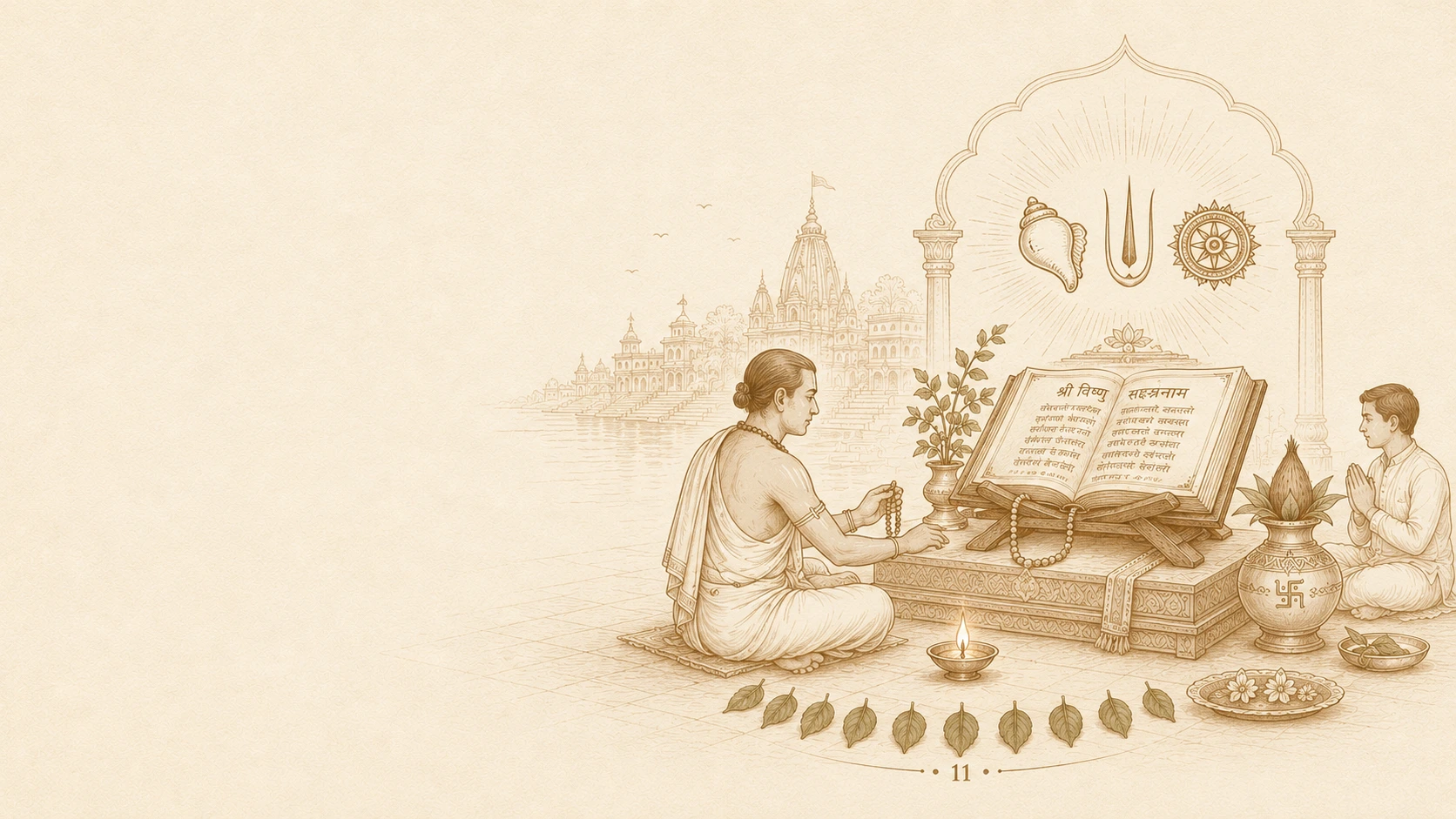
Masa Ekadashi - Vishnu Sahasranama Parayana
Vishnu Sahasranama Parayana, Vishnu Archana, Tulasi Arpana, and Mangala Arti.
Streamed live from Ram Ghat , Varanasi
October 22, 2026 | Ashwina, Shukla Ekadashi
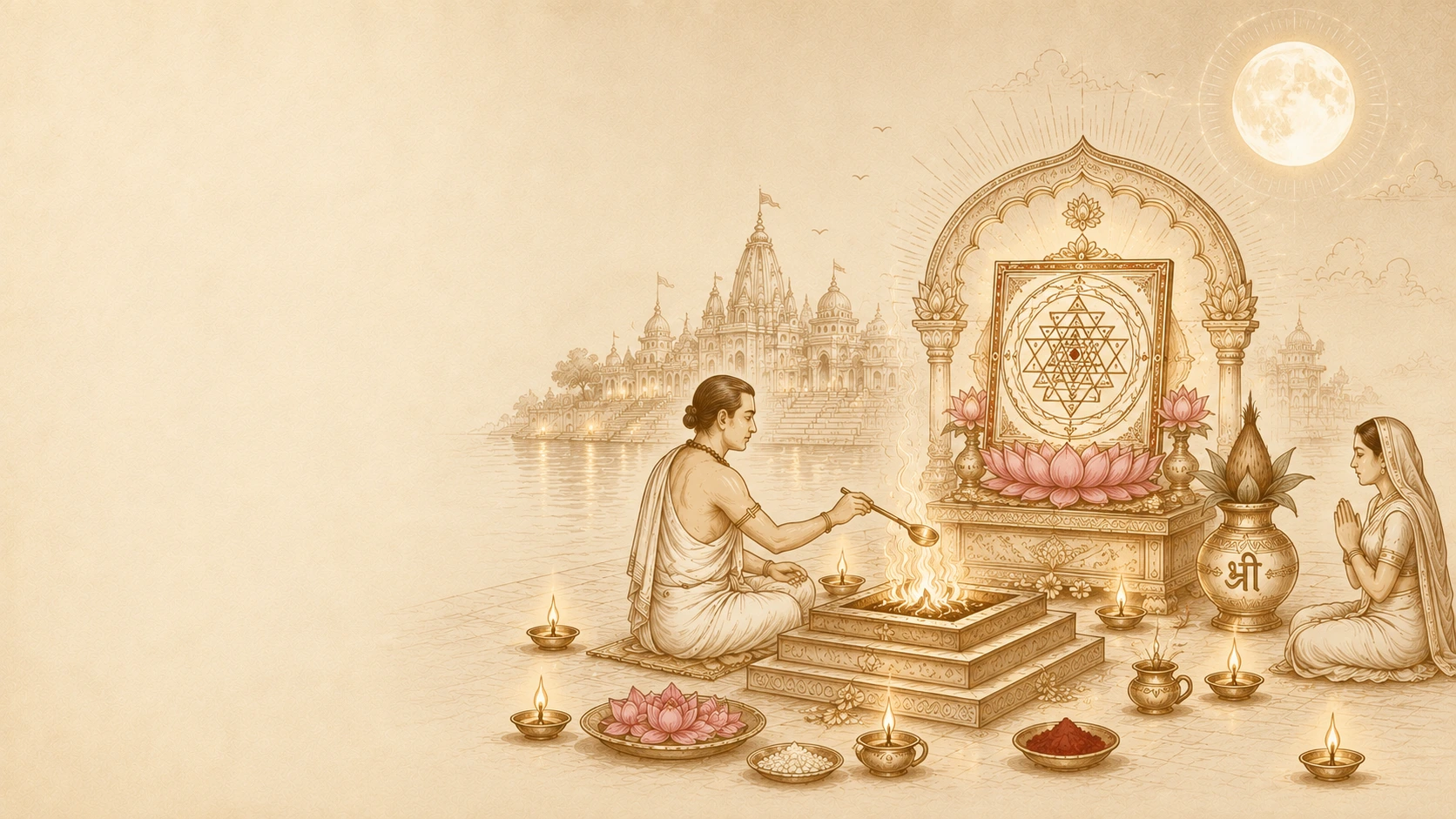
Masa Poornima - Maha Lakshmi Puja
Maha Lakshmi Puja, Sri Sukta Parayana, Kumkuma Archana, and Mangala Arti.
Streamed live from Ram Ghat , Varanasi
October 25, 2026 | Ashwina, Shukla Purnima
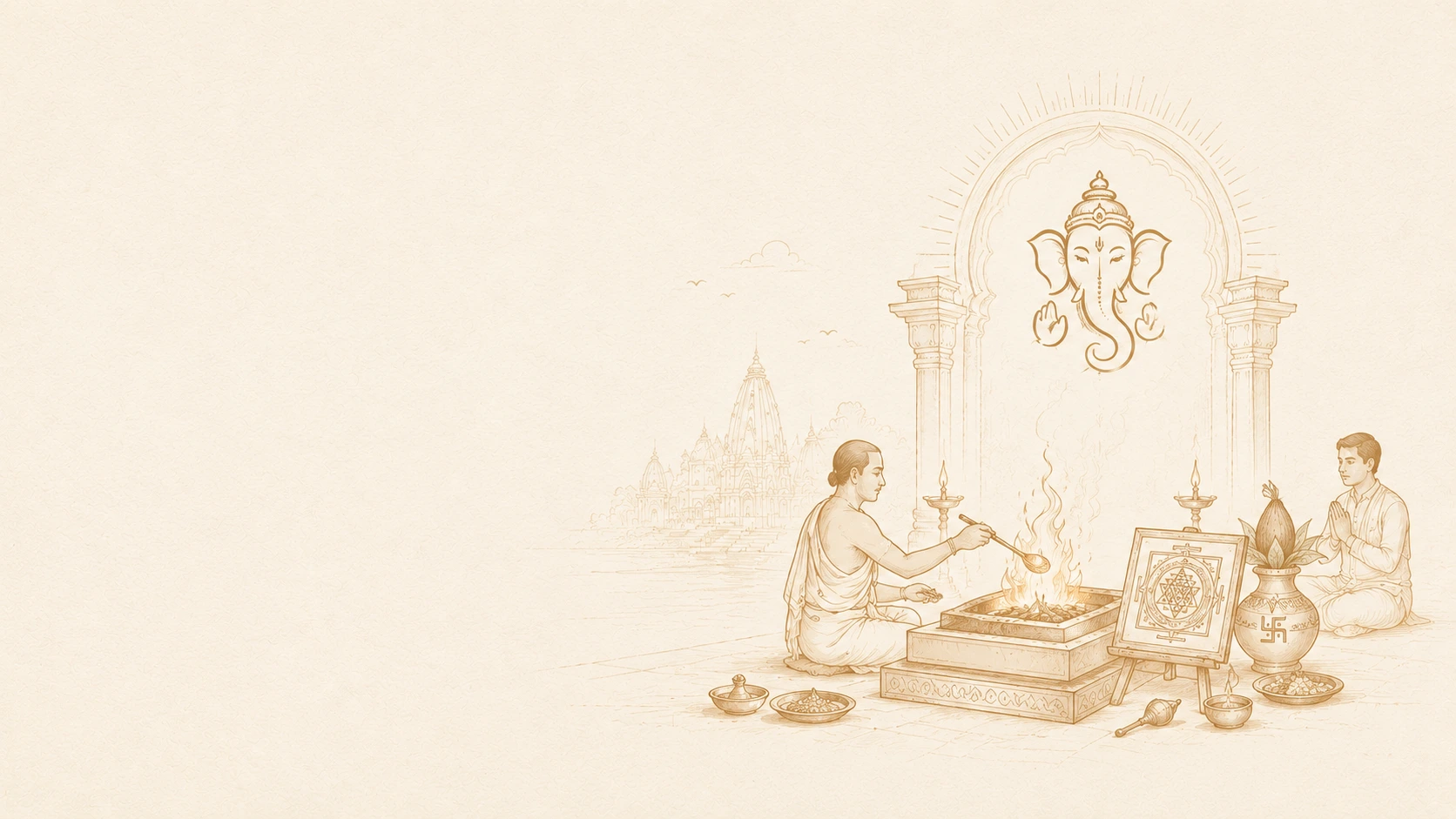
Masa Chaturthi - Sankashta Hara Anushtanam
Ganapati Yantra Pooja, Kalasha Sthapana, and Tarpanam.
Streamed live from Ram Ghat , Varanasi
October 29, 2026 | Kartika, Krishna Chaturthi
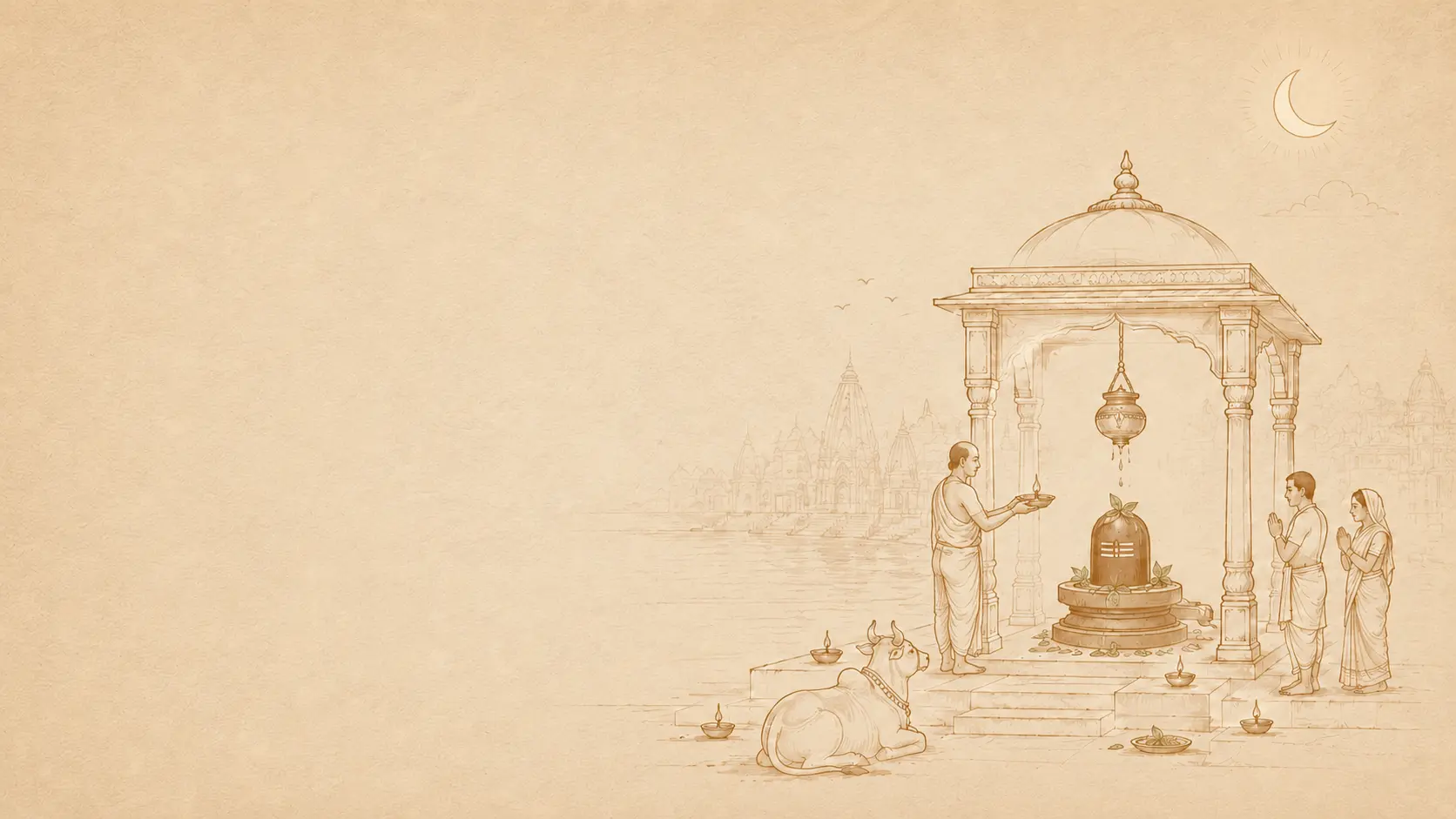
Masa Shivratri Anushtanam
Ekadashavara Rudram chanting, Rudra Havanam, and Bilva Archana.
Streamed live from Ram Ghat , Varanasi
November 7, 2026 | Kartika Masa, Krishna Chaturdashi
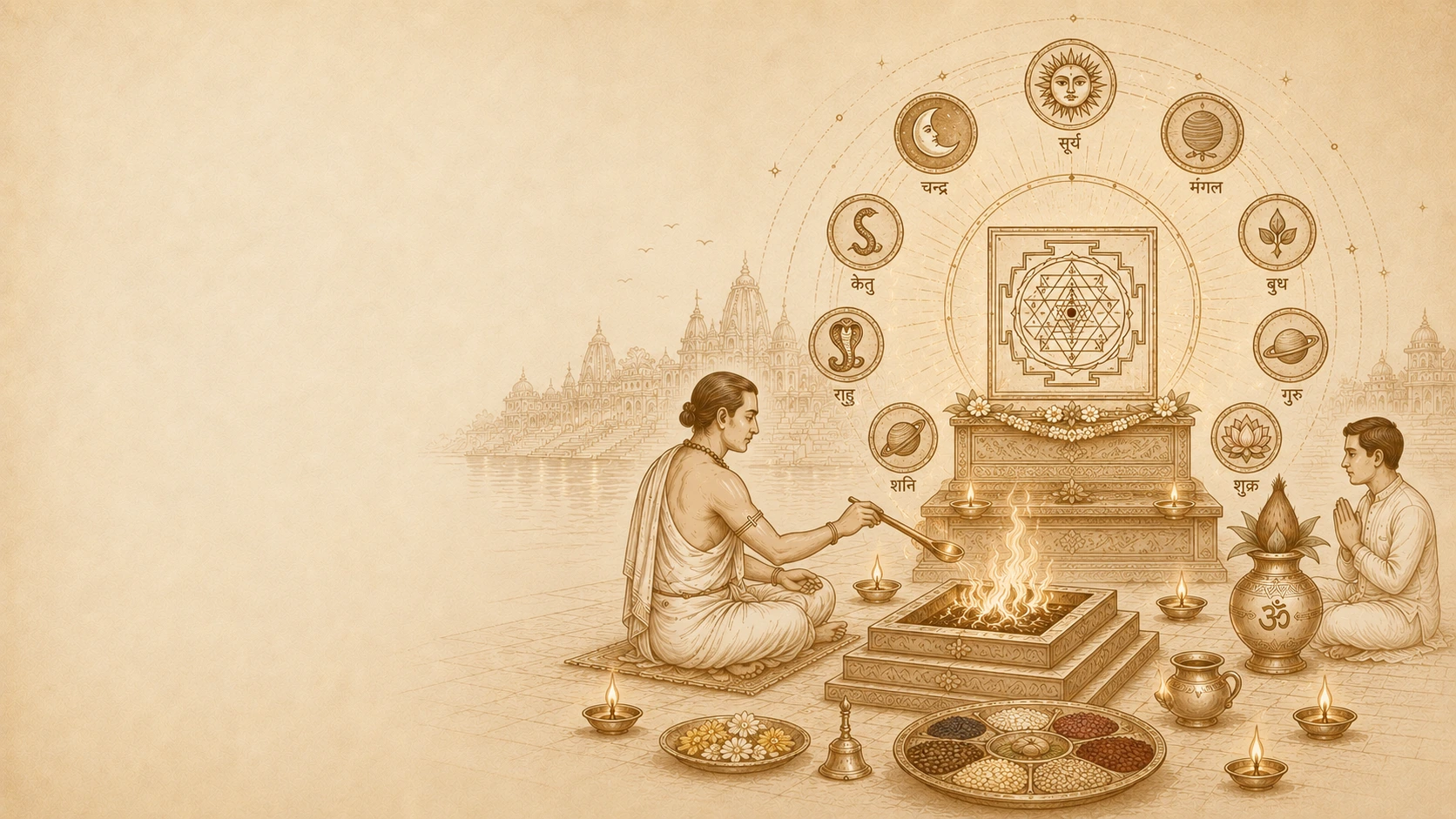
Masa Navagraha Shanti Puja
Navagraha Sankalpa, Graha Mantra Japa, Navagraha Archana, and Mangala Arti.
Streamed live from Ram Ghat , Varanasi
November 7, 2026 | Monthly Navagraha Shanti Puja
What is Anushtanam?
An Anushtanam is a disciplined spiritual practice performed to cleanse the five sheaths (Pancha Koshas) we live in—Annamaya (physical), Pranamaya (vital), Manomaya (mental), Vijnanamaya (intellectual), and Anandamaya (bliss).
If Panchanga helps us choose the right time, Anushtanam helps us become the right vessel. Through body-purifying actions, breath regulation, mantra, meditation, Parayanam (scriptural recitation), and Homa (fire offering), we align with Dharma and refine inner instruments.
The essential components of Anushtanam
Each component supports cleansing and harmonizing a specific Kosha, leading to steadiness, clarity, and inner joy.
Sharira Shuddhi (Body Purification): Bathing, clean attire, simple āchāra. Cleanses the Annamaya Kosha and prepares the body as a temple for worship.
Sankalpa (Sacred Intention): A clear resolve stated before beginning. It directs energy, aligns action with purpose, and anchors the mind.
Prana Shuddhi (Breath Regulation): Pranayama and mindful breathing stabilize the Pranamaya Kosha, bringing vitality and calm focus.
Parayanam (Scriptural Recitation): Reciting Veda, Itihasa, Purana, Stotra, or Gita with śraddhā purifies the Manomaya and Vijñānamaya Koshas. Sound (śabda) refines thought, strengthens memory of Dharma, and implants sattvic impressions.
Mantra Japa (Repetition): Counting or mental repetition stabilizes the mind-stream, dissolves restlessness, and deepens inner silence.
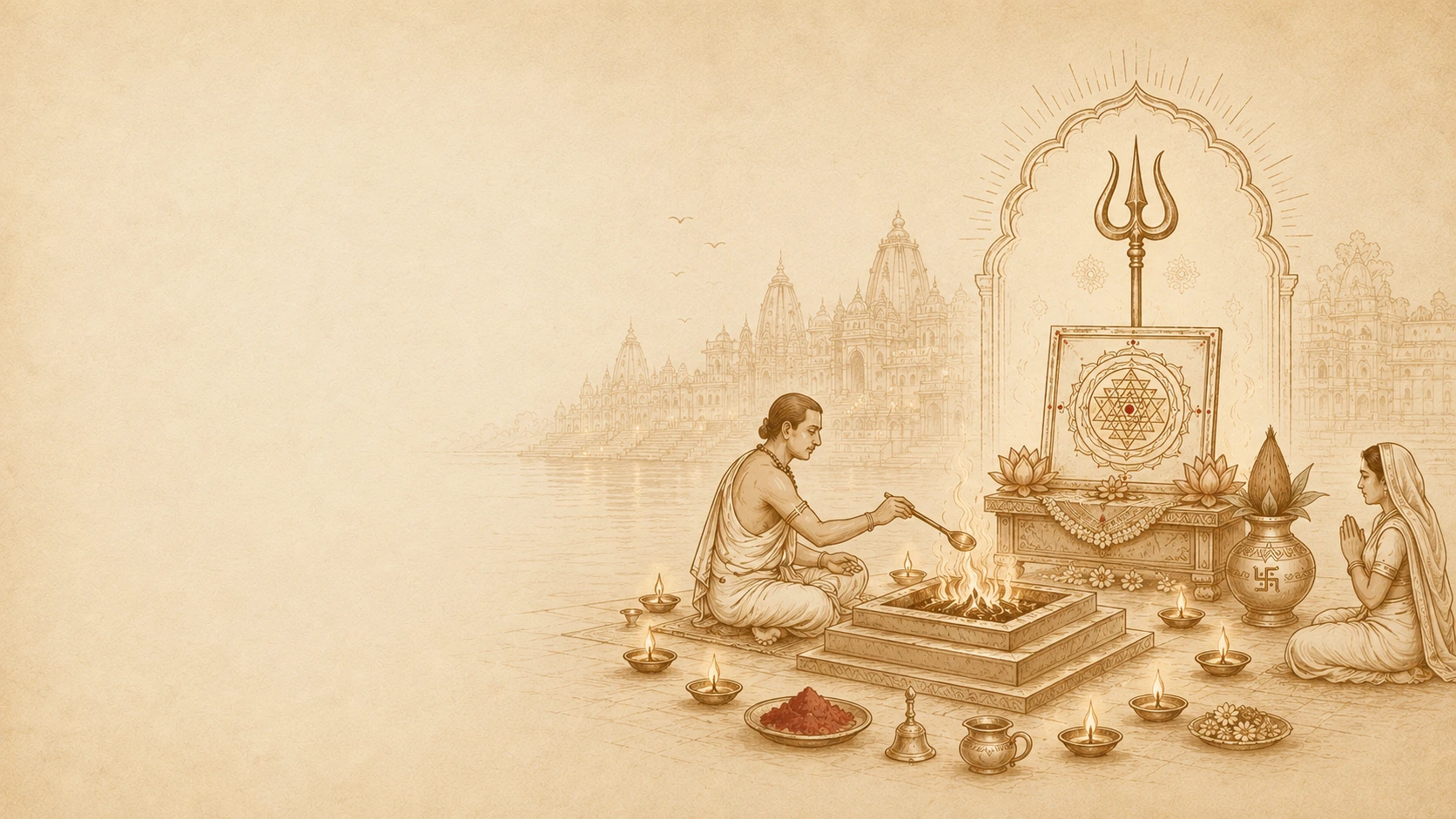
Homa (Fire Offering): Offerings made into consecrated fire with mantras. Agni carries offerings, purifies the Pranamaya and Annamaya Koshas, and sanctifies space, food, and intent. Homa integrates body, breath, mantra, and surrender into one act.
Dhyanam (Meditation): Single-pointed awareness and visualization refine the Vijñānamaya Kosha, revealing inner clarity and insight.
Naivedya, Dana & Seva (Offering and Service): Offering food, sharing resources, and serving others expand the heart and dissolve egoic boundaries.
Samarpanam & Shanti (Surrender and Closure): Offering the fruits of action to the Divine and chanting peace mantras open the Ānandamaya Kosha, leaving the practitioner restful and uplifted.
What is Parayanam?
Parayanam is the disciplined recitation of sacred texts. It refines speech, steadies the mind, and imprints Dharma through sound-vibration.Koshas addressed: Manomaya (mind) through sattvic thoughts; Vijñānamaya (intellect) through wisdom; Ānandamaya (bliss) through devotion.
Discipline: Proper pronunciation, steady pace, attentive listening, and daily or vrata-based cycles.
Effect: Clarifies thought, strengthens memory, and orients life to truth and compassion.
What is Homa?
Homa is a fire-ritual where offerings are made with mantras into consecrated fire. Agni purifies offerings, the environment, and the practitioner.Koshas addressed: Annamaya (through pure offerings), Prāṇamaya (through breath-mantra synchronization), Manomaya (through focus), and Ānandamaya (through surrender).
Mantra & Ahuti: Each offering is synchronized with mantra and breath, directing intention and prāṇa into Agni.
Outcome: Purification, protection, and upliftment for the individual and surroundings.
Why perform Anushtanam?
Anushtanam harmonizes the Pancha Koshas, aligning body, breath, mind, and intellect with Dharma. The result is health, steadiness, clarity, and inner joy.Parayanam plants wisdom through sound, Homa transforms intention into offering, and together they purify within and without.


 AnonymousUser
 300 Mudras
 Learn
Learn Gurukulas
 Discuss
 Panchanga
 Anushtanam
 Dashboard
 Verses & Playlist
 Flashcards
 Saved Chants
 Saved Discussions
 Logout
 5 Days


 Streamed live from Ram Ghat , Varanasi